Long before Taiwan became the modern island travelers know today, Indigenous peoples had already lived across its mountains, forests, rivers, and coastlines for thousands of years.
Today, Taiwan officially recognizes 16 Indigenous peoples, including the Amis, Atayal, Bunun, Paiwan, Rukai, Puyuma, Tsou, Saisiyat, Tao, Thao, Kavalan, Truku, Sakizaya, Seediq, Hla’alua, and Kanakanavu.
Each group has its own language, stories, traditional clothing, food, music, festivals, and connection with the land.
For visitors from overseas, this means there is much more to Taiwan than Taipei, night markets, temples, and skyscrapers.
And the best part?
These cultures are still alive today.
1. A Story Thousands of Years Old
Taiwan’s Indigenous history goes back thousands of years.
Long before modern cities and highways appeared, Indigenous communities lived throughout the island. Some lived along the coast and depended on the ocean and rivers, while others built communities in Taiwan’s mountains and forests.
Over hundreds of years, Taiwan experienced many changes, including European settlement, Qing Dynasty rule, and Japanese colonial rule.
These changes brought major challenges for Indigenous peoples. Traditional lands were taken or reorganized, communities were moved, and many traditional languages and customs came under pressure.
But Indigenous cultures did not disappear.
Today, communities across Taiwan are working to preserve and revive their languages, traditions, crafts, music, food, and festivals.
Young people are learning the languages of their ancestors. Traditional weaving is being taught to new generations. Indigenous musicians are creating modern music inspired by traditional sounds.
The culture is changing with modern life—but it is still here.
2. Meet the Amis: A Culture Full of Music & Energy
The Amis are the largest Indigenous people in Taiwan and have a particularly strong presence along the east coast, especially in Hualien and Taitung.
If you love music, dancing, festivals, and meeting people, Amis culture is something you should experience.
One of the best-known traditions is the Amis Harvest Festival, also called Ilisin.
The festival is traditionally connected with giving thanks for the harvest and bringing the community together.
But what does it actually look like?
Think of a huge community celebration.
People gather together.
Traditional songs fill the air.
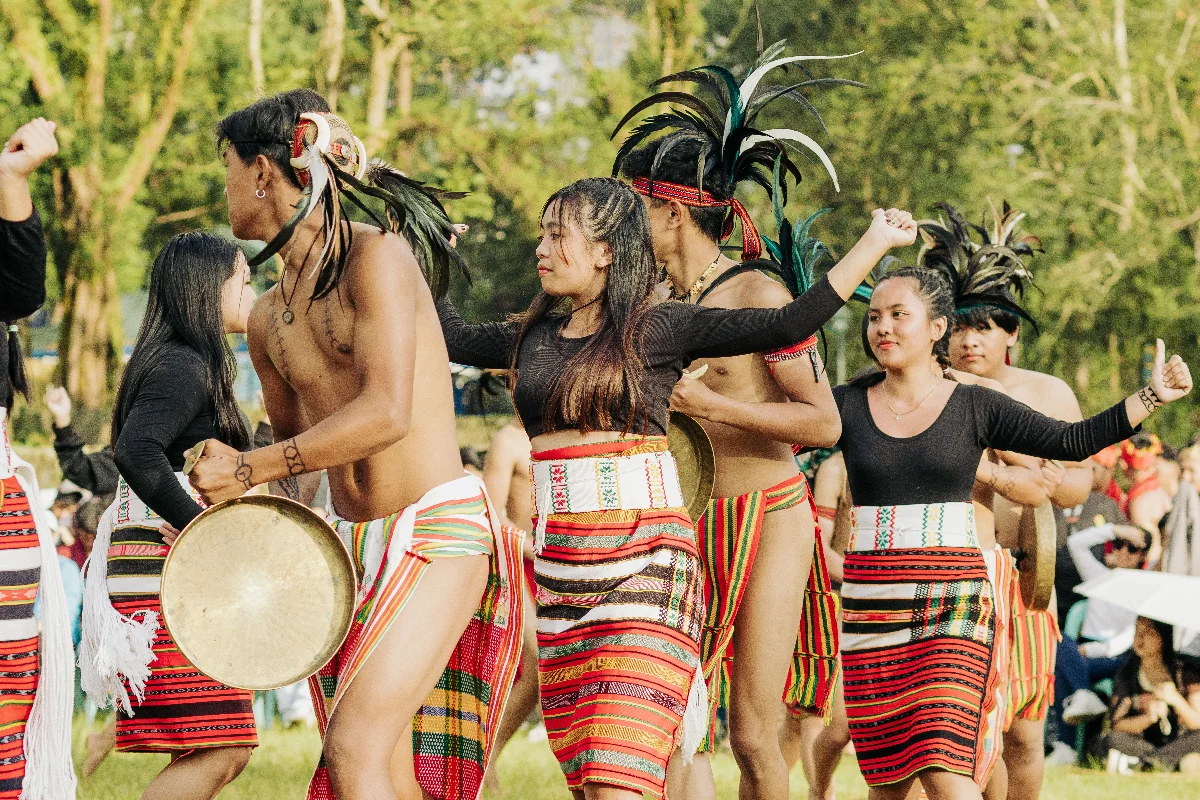
Groups dance together in powerful rhythms.
People wear traditional clothing.
Families and different generations come together.
There may also be traditional games, competitions, food, and other community activities.
It can be energetic, colorful, and incredibly welcoming.
3. How Do the Amis Celebrate Today?
The Amis Harvest Festival is still celebrated today, but each community may have its own traditions and style.
Modern celebrations can combine traditional ceremonies with activities that younger generations enjoy, such as sports competitions, cultural performances, music, and community events.
For many Amis people, the festival is an important time to return home and reconnect with family and community.
Young people who study or work in cities may travel back to their hometowns to participate.
Parents teach their children the songs and traditions.
Elders pass stories and knowledge to younger generations.
So when you see an Amis festival today, you are not simply watching an ancient tradition.
You are watching a new generation keep that tradition alive.
4. Meet the Atayal: The People of the Mountains
If the Amis are strongly connected with eastern Taiwan’s coast and valleys, the Atayal are deeply connected with the mountains.
The Atayal have traditionally lived in the mountainous regions of northern and central Taiwan, including areas of Yilan.
Their culture has developed around forests, rivers, hunting, farming, weaving, and knowledge of the natural environment.
One of the most beautiful parts of Atayal culture is traditional weaving.
Traditional patterns and colors are not simply decoration. They can represent identity, history, and cultural heritage.
But Atayal culture is much more than weaving.
It also includes traditional songs, stories, food, ceremonies, and knowledge passed from elders to younger generations.
And because the Atayal homeland is surrounded by mountains and rivers, exploring their culture often means exploring nature at the same time.
5. Atayal Traditions in Modern Life
Like the Amis, Atayal communities continue to find new ways to preserve their culture in modern Taiwan.
Traditional knowledge can now be shared through cultural workshops, community events, schools, museums, local guides, music, food, and tourism experiences.
Young Atayal people are also becoming involved in cultural revival.
They may learn traditional weaving from their grandparents, participate in community festivals, teach visitors about local history, or create new art and music inspired by their heritage.
This is what makes Indigenous culture so interesting for travelers.
You don't have to travel hundreds of years into the past.
You can see how ancient traditions are becoming part of modern Taiwan.
6. Experience Indigenous Culture in Yilan & Hualien
For international travelers, Yilan and Hualien are perfect places to discover Taiwan’s Indigenous culture.
In Yilan, the mountains are home to important Atayal communities. Areas such as Datong and Nanao offer opportunities to discover Atayal culture while surrounded by spectacular forests, rivers, and mountains.
You can learn about traditional crafts, local food, stories, and the relationship between Indigenous communities and the natural environment.
Then continue south to Hualien.
Hualien is home to several Indigenous peoples, including the Amis, Truku, Sakizaya, and Kavalan.
Here, travelers can experience a different side of Indigenous Taiwan—from the vibrant music and dancing of the Amis to local food, crafts, stories, and community traditions.
This makes traveling from Yilan to Hualien much more than simply moving from one destination to another.
You are traveling through different Indigenous cultures and landscapes.
Turn Your Trip Into a Real Cultural Experience
Reading about Indigenous culture is interesting.
But experiencing it in person is completely different.
Imagine walking through a mountain village in Yilan.
Learning how traditional crafts are made.
Listening to stories about the mountains.
Trying Indigenous food.
Then continuing south toward Hualien and discovering the vibrant culture of the Amis.
If your trip matches the local festival season, you may even have the opportunity to experience the energy of an Indigenous celebration.
You can hear the music.
See the traditional clothing.
Watch the dancing.
Taste local food.
And meet the people who continue these traditions today.
This is the kind of experience that photographs alone cannot capture.
The Perfect Yilan & Hualien Adventure
For travelers who want to see the real Taiwan, an Indigenous cultural experience is an unforgettable addition to your journey.
Start in Yilan with its mountains, rivers, Pacific coastline, and Atayal heritage.
Then travel south toward Hualien, where the landscapes become even more dramatic and Indigenous cultures become an important part of the journey.
Combine nature, adventure, food, and culture in one unforgettable trip.
Explore the mountains.
Meet local communities.
Listen to their stories.
Taste their food.
Experience their festivals.
Don't just visit Taiwan.
Experience the living cultures that have shaped this island for thousands of years.
Your Indigenous Taiwan adventure starts here!

Leave a comment