Slow down. Take a sip. Taste Taiwan.
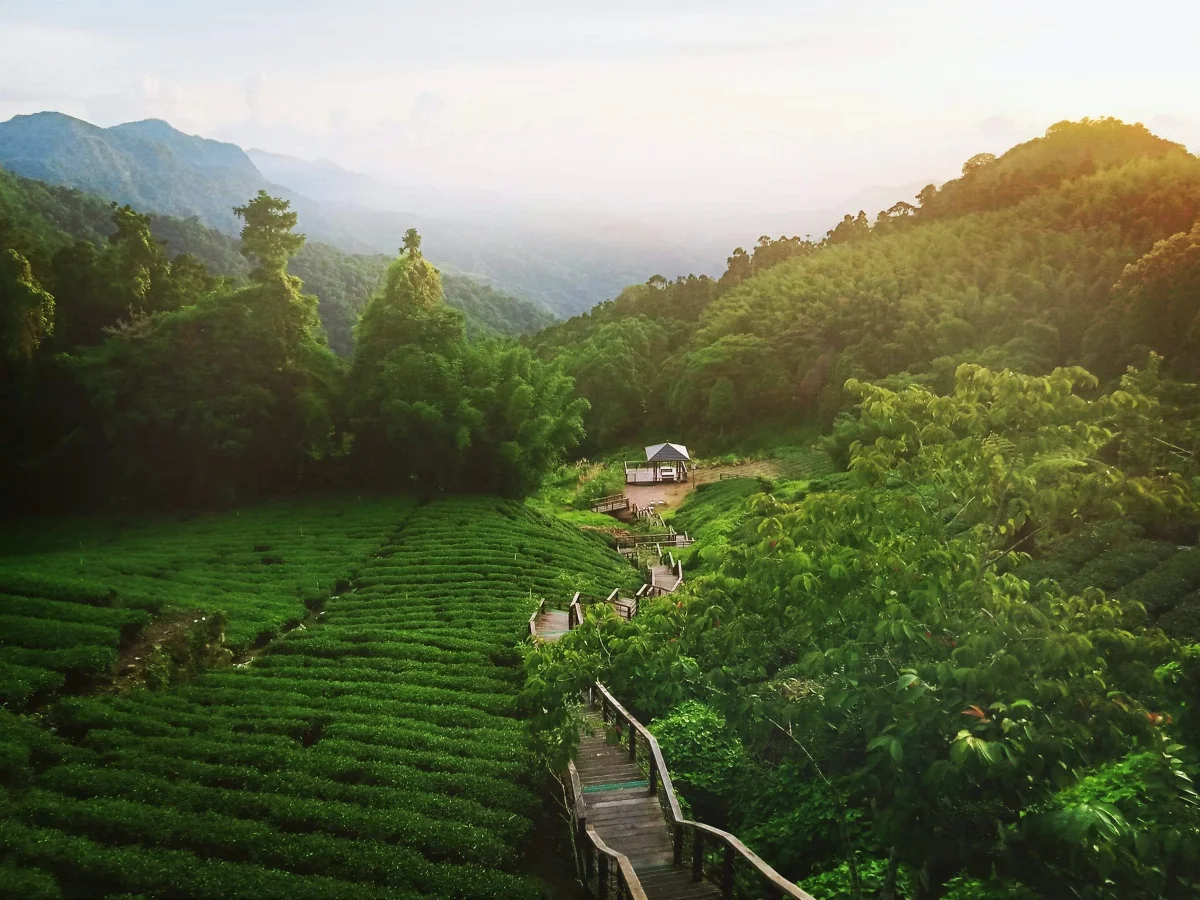
Surrounded by mountains, mist, rainfall, and warm sunshine, Taiwan has ideal conditions for growing tea. Over generations, Taiwanese tea farmers developed unique techniques for growing, processing, rolling, oxidizing, and roasting tea leaves.
Today, Taiwan is especially famous for its Oolong tea, from light and floral High Mountain Oolong to rich and roasted Tieguanyin.
For international travelers, Taiwanese tea can seem complicated at first. What is Oolong? Why does High Mountain Tea taste different? What does “roasted” mean? And how can you tell different teas apart?
Don't worry. Here is a simple guide to help you discover the fascinating world of Taiwanese tea.
1. A Brief History of Taiwan’s Tea Culture
Tea has been grown and produced in Taiwan for generations, with the modern tea industry developing strongly from the 19th century onward.
Taiwan’s unique geography plays an important role. The island has cool mountain areas, humid forests, frequent mist, and large differences between daytime and nighttime temperatures. These conditions are especially suitable for growing high-quality tea.
Over time, Taiwanese tea farmers developed different techniques for processing and roasting tea leaves, creating many distinctive Taiwanese tea styles.
Today, tea is more than just a drink in Taiwan. People drink tea when relaxing, meeting friends, welcoming guests, enjoying a meal, or simply taking a break from a busy day.
In Taiwan, drinking tea is a way to slow down and enjoy the moment.
2. The Basics: What Makes One Tea Different From Another?
The easiest way to understand Taiwanese tea is to look at two important factors: oxidation and roasting.
Oxidation changes the basic character of the tea, while roasting uses heat to change the aroma and flavor of the finished tea.
These two processes are different, which is why Taiwanese tea can have such a wide range of flavors.
A tea can be lightly oxidized and lightly roasted, creating a fresh and floral taste. Another tea can be more oxidized and heavily roasted, creating a deeper and warmer flavor.
Think of oxidation as the tea’s character, and roasting as another layer of flavor.
3. Taiwan’s Tea Roast Scale
One easy way to understand Taiwanese tea is to imagine a journey from fresh and floral → warm and roasted.
🟢 LIGHT ROAST
Fresh • Floral • Refreshing
High Mountain Oolong • Baozhong
Lightly roasted teas usually have fresh floral aromas, a clean taste, and a refreshing finish. They are a great choice for beginners who prefer delicate flavors.
🟡 LIGHT–MEDIUM ROAST
Floral • Smooth • Warm Finish
Jinxuan • Some Dongding Oolong
These teas keep their floral character but develop a little more warmth and sweetness from roasting.
🟠 MEDIUM ROAST
Smooth • Nutty • Balanced
Traditional Dongding Oolong
Medium roasting creates a balance between fresh tea aromas and deeper roasted flavors. You may notice notes of nuts, grain, honey, or dried fruit.
🟤 MEDIUM–HEAVY ROAST
Rich • Warm • Roasted
Traditional Tieguanyin
More roasting creates deeper aromas and a fuller taste. Roasted Tieguanyin can have notes of nuts, caramel, wood, and toast.
🔴 HEAVY ROAST
Deep • Toasted • Woody
Heavily Roasted Oolong Styles
Heavy roasting creates a strong, warm, toasted character. These teas are ideal for people who enjoy rich flavors similar to roasted nuts, toast, or even coffee.
🌿 Taiwan Tea Roast Journey
🟢 LIGHT ━━━━━ 🟡 LIGHT–MEDIUM ━━━━━ 🟠 MEDIUM ━━━━━ 🟤 MEDIUM–HEAVY ━━━━━ 🔴 HEAVY
Fresh & Floral → Smooth & Sweet → Nutty & Balanced → Rich & Roasted → Deep & Toasted
Tip for travelers: The roast level is not a quality ranking. Lightly roasted does not mean “better,” and heavily roasted does not mean “stronger.” They are simply different styles. Your favorite depends on your personal taste.
4. Discover the Magic of High Mountain Tea
If there is one Taiwanese tea experience you should not miss, it is High Mountain Tea, or Gao Shan Cha.
High Mountain Tea generally refers to tea grown at higher elevations in Taiwan’s mountain regions. Famous tea-growing areas include Alishan, Lishan, and Yushan.
The cool climate, mist, humidity, and large temperature differences between day and night create ideal conditions for tea plants. The slower growth at higher elevations contributes to the distinctive aroma and smooth character that many tea lovers enjoy.
A good High Mountain Oolong is often known for:
Floral aromas • Smooth texture • Clean taste • Natural sweetness • Long-lasting finish
One famous characteristic is hui gan (回甘)—a returning sweetness that becomes noticeable after you swallow the tea.
For someone tasting Taiwanese tea for the first time, this can be a fascinating experience.
5. Try Taiwan’s Most Famous Tea Styles
High Mountain Oolong
Light, floral, smooth, and refreshing. A perfect introduction to the elegant side of Taiwanese tea.
Wenshan Baozhong
Very lightly oxidized and famous for its fresh and fragrant character. It often has beautiful floral and green aromas.
Dongding Oolong
One of Taiwan’s classic Oolong styles. Depending on the tea maker and roasting style, it can range from fragrant and fresh to warm and traditionally roasted.
Oriental Beauty
Also known as Baihao Oolong, this is one of Taiwan’s most unique teas. Its tea leaves are naturally affected by tiny leafhoppers, which can contribute to its distinctive sweet, fruity, and honey-like aroma.
Tieguanyin
A famous tea style associated with Muzha in Taipei. Traditional roasted versions can have deeper flavors of roasted nuts, wood, caramel, and toast.
Taiwanese Black Tea
Taiwan also produces excellent black tea. Sun Moon Lake is particularly famous for Taiwanese black tea, which can have sweet, fruity, spicy, or malty flavors.
6. How Can You Tell Different Teas Apart?
You don't need to be a tea expert.
Start with four simple things:
Look. Smell. Taste. Feel.
Look at the color of the dry leaves and the brewed tea.
Smell the tea before drinking.
Take a small sip and notice whether it tastes floral, fruity, sweet, nutty, roasted, or earthy.
Finally, pay attention to the feeling in your mouth and the flavor that remains after you swallow.
A light High Mountain Oolong-may feel fresh and floral.
A roasted Tieguanyin- may feel deeper and warmer.
An Oriental Beauty- may surprise you with honey and fruit-like sweetness.
The best way to learn is to taste several teas side by side.
Tea tasting is not about finding the “best” tea. It is about finding the tea you personally love.
7.From Traditional Tea to Modern Taiwanese Drinks
Taiwanese tea culture is not limited to traditional teapots. Tea is part of everyday life and also an important gift in Taiwanese culture. People often choose high-quality tea to give to elders, business partners, or respected seniors as a thoughtful gesture of respect and appreciation.
Today, tea is also part of modern food culture. After enjoying a traditional cup of High Mountain Oolong, you can try Bubble Tea, cold-brew tea, fruit tea, tea lattes, tea desserts, or tea cocktails.
For travelers exploring Yilan and eastern Taiwan, a tea experience is a relaxing way to discover local culture. Learn how to taste different teas, compare light and roasted Oolongs, and discover the flavors of Taiwan’s mountains. Before you leave, pick up a beautifully packaged Taiwanese tea to bring home as a special gift for family, friends, or someone important to you.

Leave a comment